The Vital Language of Spring: More Than Just a Pretty Bouquet
The emergence of spring flowers is one of the most universally recognized signals of change. It is a visual language that speaks of renewal, warmth, and growth. While we often admire a floral garden for its aesthetic beauty, the underlying narrative is far more complex and practical. This seasonal bloom represents a meticulously timed biological event, a driver of ecological health, and a cornerstone for countless human endeavors from art to commerce.
Unpacking the Spring Bloom: Characteristics Beyond Color
When we discuss spring flowers, we are referring to a specific class of plants with shared adaptive traits. These are typically perennial bulbs or early-season annuals that have evolved to capitalize on the unique conditions of the post-winter period. They emerge with the increasing daylight and milder temperatures, often completing their primary blooming cycle before the canopy of deciduous trees fully develops, thus maximizing their access to sunlight.
Classic examples like tulips and daffodils store energy in their bulbs, a compact underground reservoir that allows for rapid growth once conditions are favorable. Chamomile and other early flowering herbs prioritize quick establishment. This isn't merely about beauty; it's a survival strategy. The resulting floral garden becomes a dense tapestry of life, each species playing a role. The vivid colors and shapes we admire are, in essence, highly effective advertisements for pollinators, ensuring the continuation of the species and the pollination of fruit-bearing plants that follow.
The Functional Palette: From Ecosystem to Economy
The real-world relevance of this seasonal floral collection is immense. Ecologically, these early blooms provide the first critical food source for bees, butterflies, and other insects, kickstarting the annual cycle of biodiversity. In agriculture, understanding bloom times is essential for orchard management and predicting harvests. For horticulturists and garden designers, the sequence of spring flowering dictates planting schemes and landscape planning.
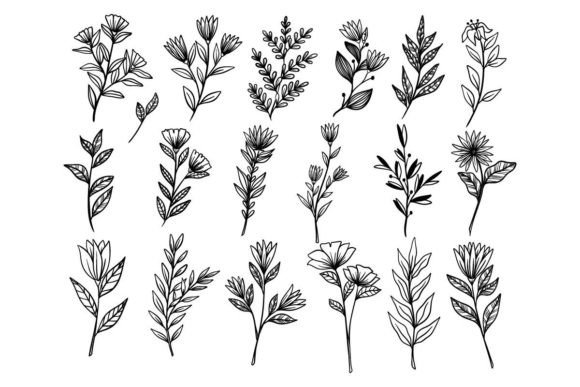
Beyond the natural world, the imagery and concept of spring flowers permeate human culture and industry. The "Spring Flowers. Floral Garden" motif is not just a theme for personal enjoyment; it is a powerful design language. The clean, recognizable forms of tulips, chamomiles, and other spring blossoms translate perfectly into graphic assets. A well-crafted vector set of these flowers, available in formats like EPS for scalability, becomes a versatile tool. Designers utilize these assets in branding for wellness products, promotional materials for seasonal events, educational content for botany, and user interface elements that convey freshness and positivity.
The Cartoon Flower and Vector Bouquet: A Bridge Between Nature and Creation
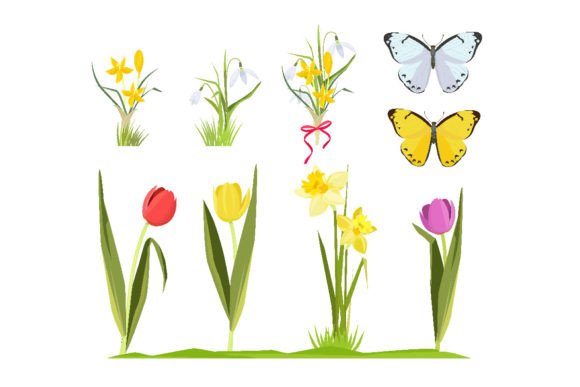
This leads us to a fascinating intersection: the stylized representation of these natural forms. A bouquet of cartoon flowers derived from chamomiles and tulips does not replace the real thing; it extends its utility. Illustration spring floral themes allow creators to communicate the idea of spring—its cheerfulness, simplicity, and growth—without the constraints of photography or realism. These vector illustrations become a universal visual shorthand.
For educators, such illustrations make botanical concepts accessible and engaging for students. For business owners, they offer a royalty-free, adaptable way to incorporate seasonal marketing into websites, flyers, and product packaging. For hobbyists in digital crafts, a comprehensive vector set provides the building blocks for personalized greeting cards, blog graphics, or DIY project designs. The advantage here is clarity and flexibility. A vector tulip can be resized, recolored, and deconstructed without loss of quality, making it as practical a tool as a physical trowel for a gardener.
Considerations for Cultivating and Utilizing the Spring Theme
Whether working with living plants or their digital counterparts, key considerations apply. For the physical floral garden, success depends on understanding soil conditions, sunlight patterns, and the specific needs of each plant type. A tulip requires different care than a spreading chamomile. Planning for a staggered bloom period ensures a longer-lasting display, rather than a single, fleeting peak.
When utilizing spring floral imagery professionally, similar planning is needed. Selecting a vector collection requires attention to artistic style, thematic cohesion, and technical compatibility with your design software. The goal is to achieve a natural, integrated look. Overuse of highly stylized cartoon flowers in a serious botanical guide might seem incongruous, whereas they could be perfect for a children's activity sheet. The context dictates the choice. Furthermore, while keywords like "spring flowers floral garden" are relevant for discovery, the content itself must offer substantive insight into their use, characteristics, or cultural significance to fulfill informational search intent genuinely.
Observing the Workflow: From Seed to Screen
We can observe this principle in action across different user groups. A landscape architect begins with bloom-time charts and climate data to design a client's garden—a workflow grounded in biology. A graphic designer, tasked with creating a spring campaign for a client, might start by browsing a digital bouquet summer flower vector pack to establish a visual mood—a workflow grounded in aesthetics and communication. Both are leveraging the same core concept—the spring floral resurgence—but through entirely different mediums and with different end goals.
This duality highlights the unique position of spring flora. They are tangible, biological entities with measurable environmental impacts. Simultaneously, they are potent symbols, whose distilled forms become assets in creative and commercial workflows. A researcher might study the phenology of these blooms to track climate change, while a small business owner uses illustrations of them to sell more honey or tea. The thread connecting these activities is the inherent value and recognition of the spring flower motif.
The trend towards blending these worlds continues. We see more educational resources using friendly illustrations to explain complex plant biology. We observe brands using authentic, nature-inspired vector graphics rather than abstract shapes to convey their connection to natural ingredients. This reflects a desire for authenticity, even in stylized representation. The most effective use cases honor the source material—its structure, its role, its seasonal truth—whether depicting it with a camera, a paintbrush, or a vector drawing tool.
In practice, implementing a project centered on spring flowers, therefore, demands a dual awareness. One must consider the factual, horticultural realities if dealing with a living garden. One must also consider the communicative, symbolic power of the forms if dealing with their representation. A successful outcome, whether a thriving physical garden or an effective design project, comes from respecting both the science and the symbolism inherent in that first, vital bloom of the season.
The collection of flowers we associate with spring is, ultimately, a resource. It is a resource for ecosystems, for our senses, for our cultural expressions, and for our creative industries. Understanding it thoroughly—from the mechanism of the bulb to the construction of a vector path in a digital illustration—allows professionals, creators, and enthusiasts to harness that resource meaningfully and responsibly, across an astonishing variety of applications.